Bring inbound freight into view.

Coordinate pickup
Bring supplier freight into your business. Keep pickup details, receiving requirements, and carrier updates together.
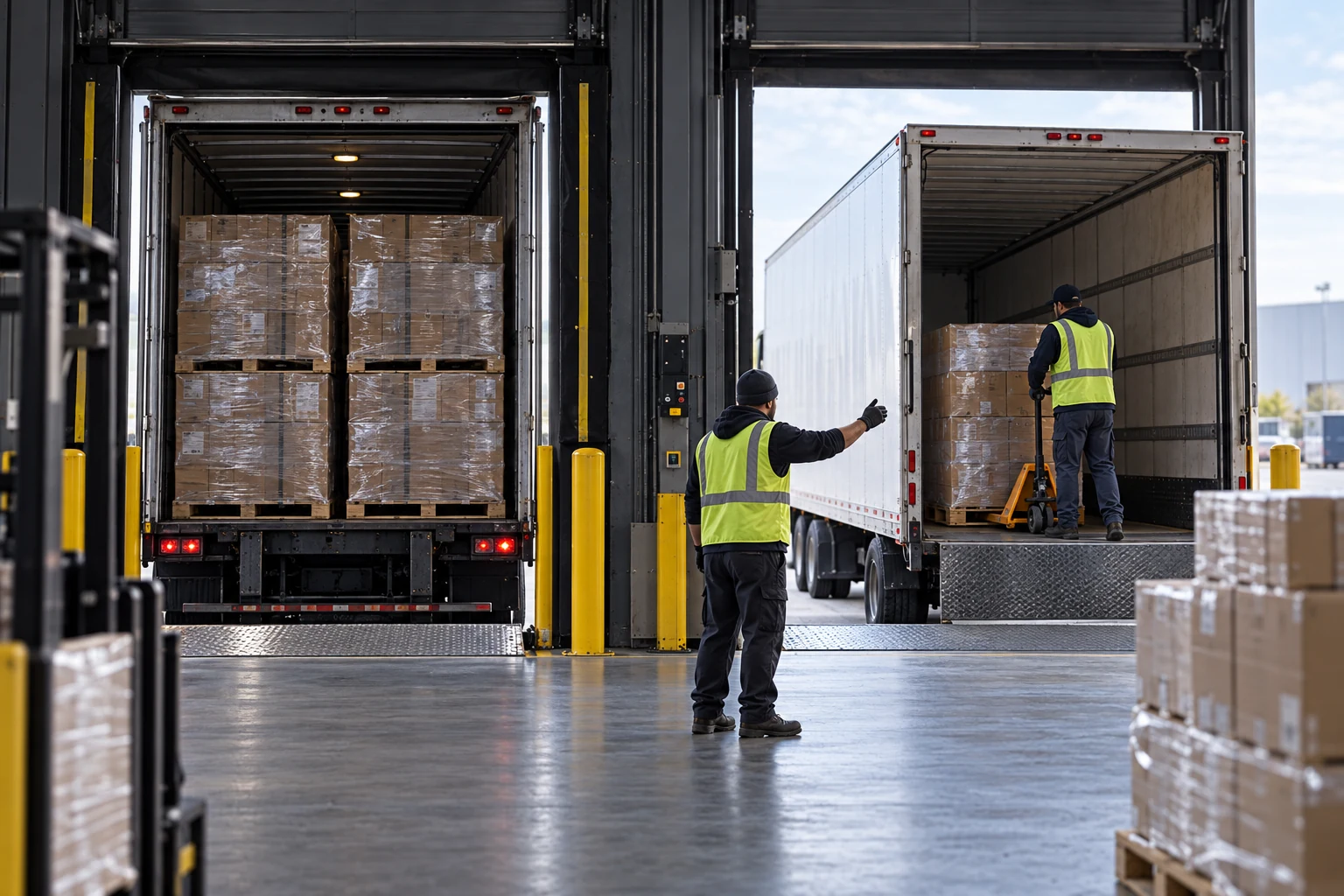
Prepare your receiving location
Supplier pickup details and your receiving requirements
Supplier locations and freight profiles
Review the carrier record
Confirm the supplier’s shipping details and when the freight will be packed and ready.
Add the right contact, address, dock access and handling requirements.
Before pickup
Keep the booked load, dated carrier reports and available documents together in your workspace.
Pickup and delivery ZIPs, addresses and receiving contacts.
Questions & answers
Pallets or handling units, commodity, packaged dimensions and weight.
LTL shares trailer space across shipments, which can cost less than a dedicated truck for smaller loads. Compare eligible carrier rates, service details and disclosed fees for your freight. Savings vary with the lane, load, timing and carrier.
Choose from LTL, full truckload, box truck and cargo van equipment. Available services depend on your lane, freight, timing and handling requirements.
Start with pickup and delivery ZIPs, equipment and pickup timing. Add accurate packaged dimensions, weight, commodity information and handling needs. For LTL, confirm the freight class. Available quotes depend on those details.
Yes. Prepare your shipment, compare eligible services and book online for your business. Use saved locations and freight profiles to prepare repeat loads, then review each new shipment and its current quote.