Measure your pallet before you quote.
Accurate packaged dimensions and weight give carriers the right picture of your load.
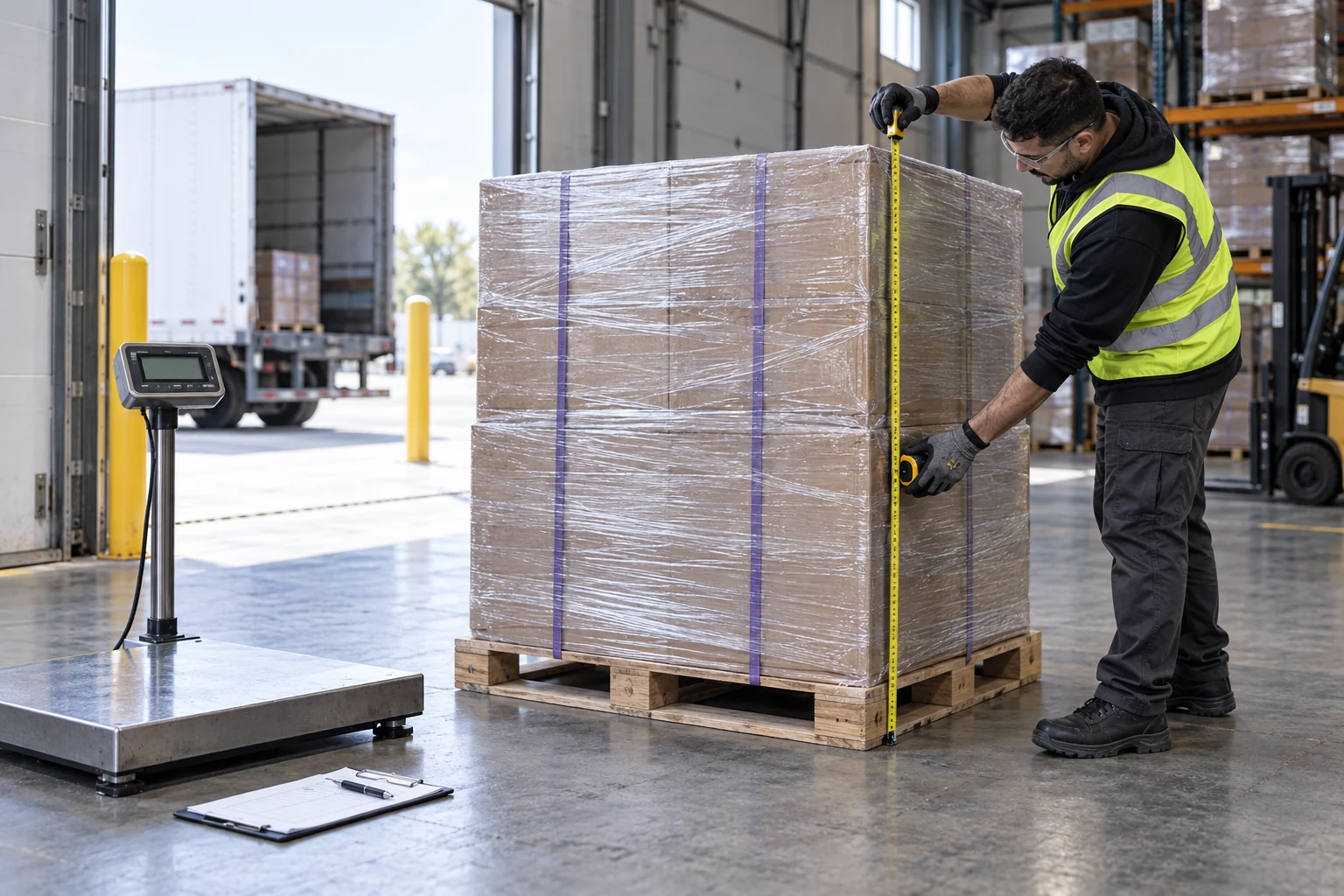
Have these details ready.
- Length × width × height of each packaged unit
- Weight including pallet, freight and packaging
- Handling-unit count, commodity and confirmed freight class
1.Measure the shipment as it will travel
Finish packing before you measure. Record the outside length, width and height of each handling unit, including its pallet, crate or protective packaging. Use the full footprint rather than only the product dimensions. If units differ in size, record them separately so the shipment details describe what will actually be picked up.
2.Include the complete weight
Use an accurate weight for the packaged unit, including the freight, pallet and packaging. Count every handling unit and confirm the shipment total. Keep the measurements in the units requested by the booking form. Recheck the numbers when packaging or pallet count changes; last month’s load may differ from this one.
3.Confirm the commodity and class
Describe what you’re shipping clearly. For LTL, confirm the applicable freight class and commodity details with a current classification source or the carrier. Density is one part of classification; handling, stowability and liability also matter. A weight or dimensions calculation alone does not establish the correct class for every commodity.
See NMFTA freight classification for guidance.
4.Enter, review and save
Add the measurements and handling needs to your ShippClub shipment. Review the freight details before choosing a current quote. If you ship the same load regularly, save a freight profile or template to prepare the next draft. Confirm the actual dimensions, weight and timing each time. Prepare the packaging for the selected carrier’s requirements, and review its guidance before pickup.
See Carrier packaging guidance before pickup.